
That scratchy, heavy, end-of-day feeling isn’t just fatigue—it could be dry eyes. The good news: dry eye is one of the most responsive conditions to simple, consistent lifestyle changes. You don’t have to overhaul your life to feel better. You just have to know where to start.
At ProEye Vision Center in Omaha and Lincoln, we help patients get back to reading, driving, and working without eye irritation getting in the way. Learn more about dry eyes and lifestyle changes that can improve your comfort.
Why dry eye feels so unpredictable
Dry eye isn’t just a lack of moisture; it’s a breakdown in balance. Your tear film is a three-layer system made up of water, oils, and mucin. When any one layer is off, the whole thing becomes unstable. That’s why symptoms can feel so inconsistent and hard to pin down:
- Burning, stinging, or a persistent gritty sensation
- Paradoxically watery eyes (your tear glands overcompensate for dryness)
- Eyelids that feel heavy or fatigued before the day is even over
- Vision that blurs mid-sentence and clears after a blink
- Symptoms that spike after screen time, in dry indoor air, or by late afternoon
Changing your screen habits can reduce irritation
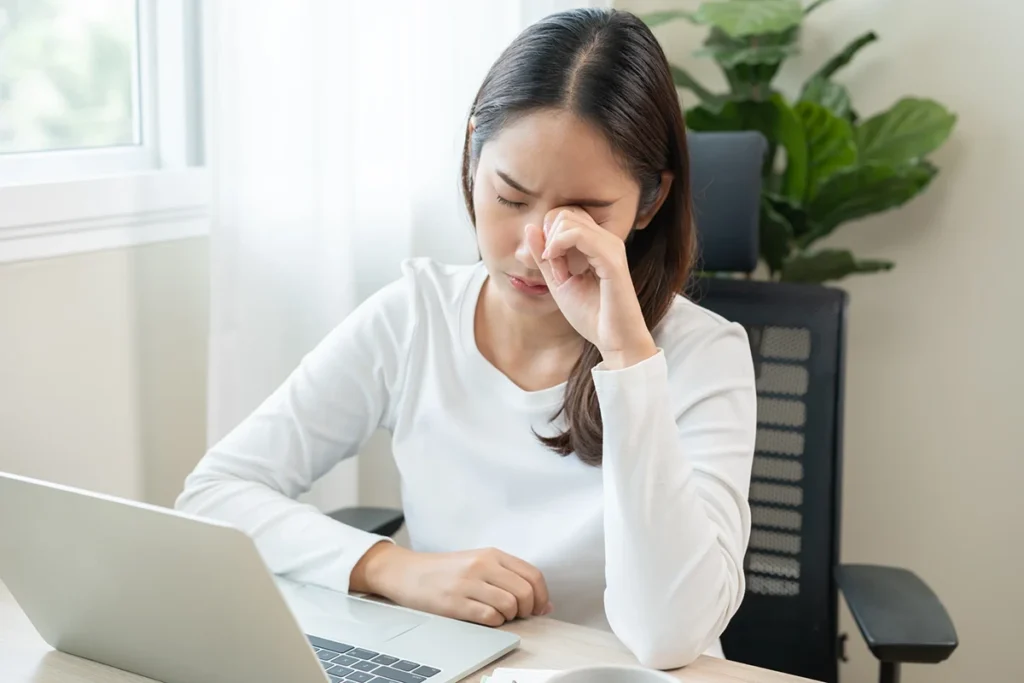
Most people don’t realize how much screen time affects their blinking. When you’re focused on a screen, your blink rate drops—and the blinks you do take are often incomplete, leaving parts of your eye surface unprotected.
Fewer complete blinks mean more evaporation and a thinner, less stable tear layer, which is why your eyes often feel fine in the morning and miserable by 3 p.m.
A few adjustments can help with irritation:
- Follow the 20-20-20 rule: Every 20 minutes, look 20 feet away for 20 seconds.
- Lower your monitor so you’re looking slightly downward; this reduces the exposed surface area of your eye
- Bump up your font size to reduce the visual effort your eyes are working through
- Redirect vents and fans away from your face
- Run a humidifier, especially in winter when indoor heating pulls moisture from the air
Tips for dry eye relief at home
Sometimes your eyes are doing fine until you walk into a less-than-ideal environment. Dry air, dust, smoke, or strong fragrances can all have negative effects on your visual comfort.
Try these changes:
- Humidify your bedroom overnight—this is when your eyes repair themselves
- Replace HVAC filters regularly to reduce airborne irritants
- Wear wraparound sunglasses on windy days to shield your eyes from evaporation
- Step away from smoky or heavily fragranced spaces when you can
- Rinse your eyelids gently after yard work, especially during pollen season
Eyelid hygiene for better eye health
For many dry eye sufferers, the real culprit isn’t the eye itself but the glands in the eyelids. Tiny oil glands called meibomian glands line the edges of your lids and are responsible for the oily layer of your tear film. When they get clogged, tear evaporation accelerates, and symptoms worsen quickly.
Develop these helpful habits:
- Warm compresses for 5–10 minutes, a few times per week, help loosen blocked glands
- Gentle lid cleansing with a lid-safe product removes debris that builds up throughout the day
- Replace eye makeup regularly — mascara and liner can harbor bacteria that irritate the lid margin
- Give your contact lenses a rest on symptomatic days, or ask about lens options better suited to dry eyes
When to use eyedrops
The eye drop aisle can be confusing. Allergy drops, redness-relief drops, and lubricating drops all look similar, but they work very differently. “Get the red out” drops constrict blood vessels and can actually worsen dryness with repeated use.
For dry eye relief, look for preservative-free lubricating drops and use them as directed. When in doubt, ask your eye doctor which formula fits your specific situation.
Ready to find lasting relief?
Lifestyle changes are helpful, but they work best when paired with a clear understanding of what’s causing your dry eye in the first place. During a comprehensive eye exam, we can identify whether you’re dealing with an oil layer deficiency, inflammation, a blinking issue, or something else entirely—and provide you with a targeted treatment plan that addresses the root cause.
Ready to feel better? Schedule an appointment with our eye doctors in Omaha or Lincoln. Let’s figure out what your eyes need and get you back to seeing comfortably.