It is normal for vision to change over time, especially after age 40. Reading small print may become harder, driving at night may feel less comfortable, and eyes may need more light to see clearly. However, not every change should be dismissed as a normal part of aging. A comprehensive eye exam can distinguish everyday vision changes from eye conditions that need treatment or closer monitoring.
Which vision changes are common with age?
Some age-related changes happen gradually and can often be corrected with glasses, contacts, or adjustments to daily habits. Common examples include:
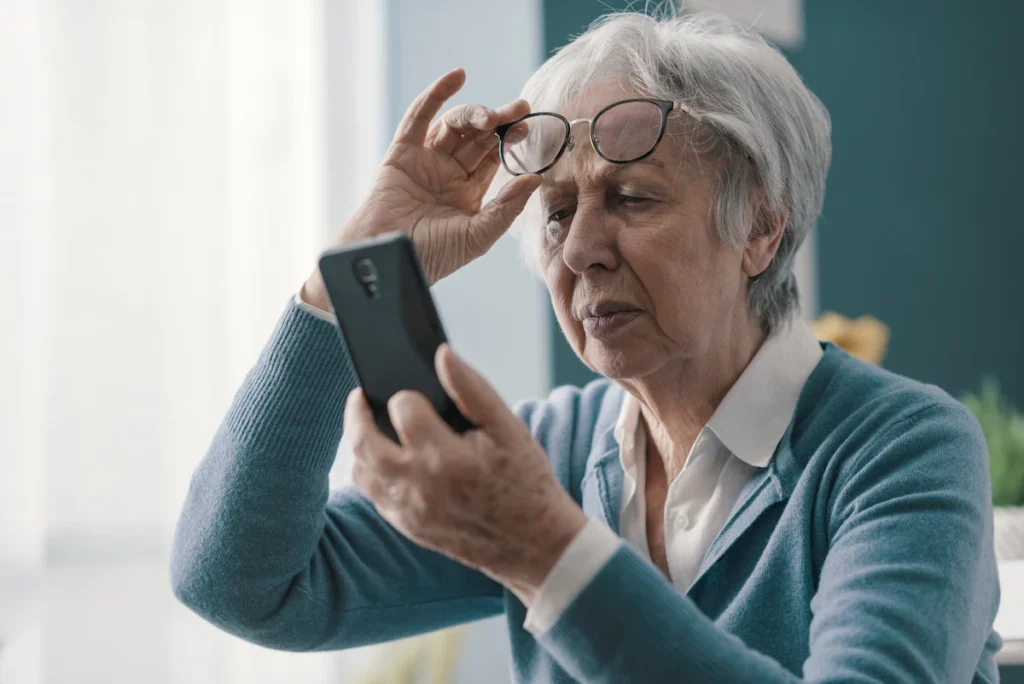
- Difficulty focusing up close: Presbyopia makes it harder to read menus, phone screens, and other nearby text. Many adults first notice this in their 40s.
- Needing brighter light: Aging eyes may require more light for reading, cooking, or other detailed tasks.
- More sensitivity to glare: Headlights, bright sunlight, and reflective surfaces can become more bothersome.
- Slower adjustment between light and dark: It may take longer for your eyes to adapt when entering a dim room or driving at night.
- Dryness or occasional watering: Tear production and tear quality can change with age, causing irritation or fluctuating clarity.
These changes can be frustrating, but they do not necessarily mean there is a serious eye health problem. Still, gradual changes are worth discussing during regular eye care visits.
What vision changes are not considered normal?
Sudden, severe, or worsening changes should always be evaluated promptly. While many eye conditions become more common with age, early detection can help protect vision.
Contact an eye doctor promptly if you notice:
- Sudden vision loss or a dark curtain in your field of vision
- New flashes of light or a sudden increase in floaters
- Distorted lines, wavy text, or a blurry spot in central vision
- Persistent eye pain, redness, or light sensitivity
- Double vision or a rapid change in prescription
- Significant trouble seeing at night that affects safe driving
These symptoms can be associated with conditions such as retinal detachment, glaucoma, cataracts, diabetic eye disease, or macular degeneration. They should not be treated as a routine part of getting older.
Why does macular degeneration matter?
Age-related macular degeneration (AMD) affects the macula, the part of the retina responsible for sharp central vision. It can make faces, text, and fine details appear blurry or distorted. Peripheral vision may remain intact, so early changes can be easy to overlook.
People with a family history of AMD, a history of smoking, or certain health conditions may have a higher risk. Macular degeneration exams can help identify retinal changes before they have a major impact on daily life.
How often should older adults have eye exams?
The right exam schedule depends on your age, prescription, medical history, symptoms, and risk factors. In general, routine exams become increasingly important as eye disease becomes more common with age. Eye exams for seniors play an important role in protecting sight as you age, even when your vision seems stable.
Regular exams do more than update a glasses prescription. They allow your eye doctor to assess eye pressure, examine the retina, and look for early signs of conditions that may not cause noticeable symptoms at first.
Protect your vision with regular eye care
Some changes, such as needing reading glasses or brighter light, are expected with age. Others can signal an eye condition that deserves timely attention. Regular eye exams help you stay ahead of changes in your vision and provide a clearer picture of your long-term eye health.
If you have noticed new symptoms, changes in daily vision, or difficulty with activities you used to do comfortably, schedule an eye exam today.