Yes, many people with dry eyes can still wear contact lenses comfortably. The key is identifying what is causing the dryness and finding lenses and care strategies that work for your eyes. A dry eye evaluation can help determine whether your symptoms stem from an unstable tear film, eyelid gland issues, screen use, allergies, or another concern.
Why do contact lenses feel uncomfortable with dry eyes?
Your tear film keeps the front of your eyes smooth, hydrated, and clear. When tears evaporate too quickly or do not provide enough moisture, contact lenses can add friction to an already irritated eye surface.
Dry eye symptoms while wearing contacts may include:
- Burning, stinging, or redness
- A gritty or “something in my eye” feeling
- Blurry vision that comes and goes
- Lenses that feel dry or shift during blinking
- Needing to remove lenses earlier than usual
Long periods of screen use, air conditioning, wind, smoke, and reduced blinking can all make symptoms worse. Contact lens wear may also contribute to dry eye symptoms for some people.
Can the right contact lenses make a difference?
Yes. The lens material, fit, replacement schedule, and your wearing habits can all affect comfort. During a contact lens exam, we can evaluate your prescription, the surface of your eyes, and how your current lenses fit.
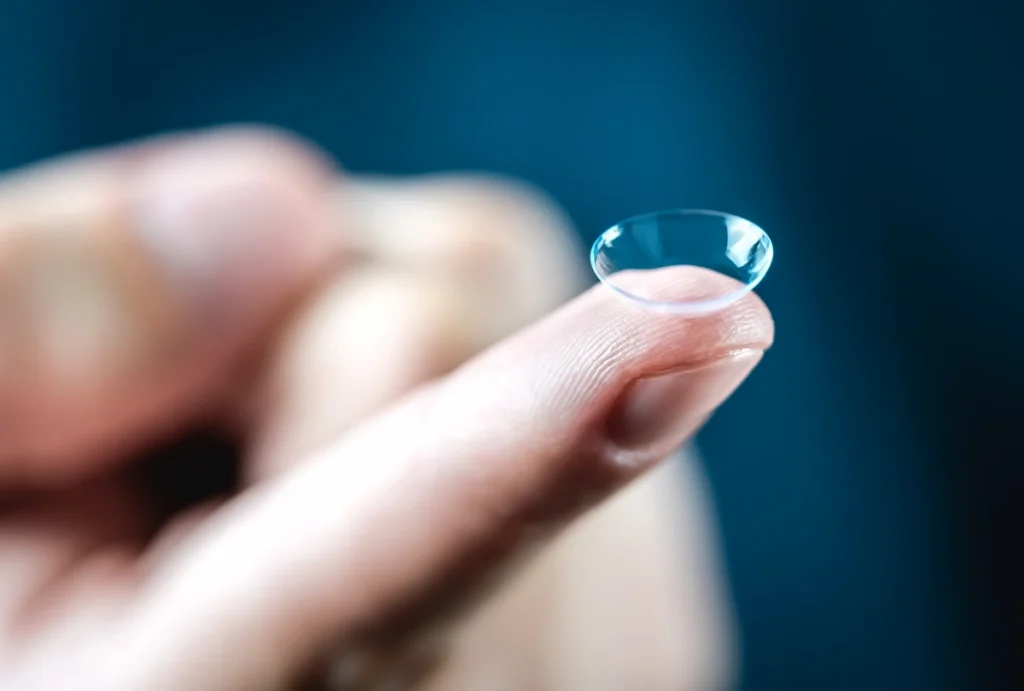
Depending on your needs, we may recommend changes such as a different lens material, a more frequent replacement schedule, or a lens designed to retain moisture. Some patients with more significant dry eye may benefit from specialty contact lenses that maintain a layer of moisture over the eye.
The best option depends on your eyes, lifestyle, vision needs, and the cause of your dryness. It is important not to switch brands or extend your wear schedule without professional guidance.
What can help contacts feel more comfortable?
Dry eye management often works best when it addresses both the lenses and the underlying cause of symptoms. We may suggest:
- Using contact lens-compatible rewetting drops
- Taking regular screen breaks and blinking fully
- Limiting exposure to direct fans, vents, and smoke
- Following your prescribed replacement schedule
- Removing lenses if your eyes become painful, very red, or unusually sensitive to light
- Treating eyelid inflammation or other conditions that affect tear quality
Proper lens care is just as important. Contact lens options can be selected based on your individual vision, lifestyle, and eye health needs rather than a one-size-fits-all approach.
Find a more comfortable way to wear contacts
Dry eyes and contact lenses can coexist with the right plan. An eye doctor can assess your symptoms, update your contact lens fit when needed, and recommend dry eye care that supports clearer, more comfortable vision. Schedule an appointment to find a contact lens solution that feels better throughout your day.